
Tip & Trick
Mastering keyboard shortcuts can transform your productivity. These 10 underused symbols starting with 'A'—from ampersands to arrows—offer powerful ways to streamline typing, coding, and document formatting across Windows, Mac, and Linux systems.
Ampersand Symbol (&) for Logical Operators

Ever spent minutes typing "and" in code when a single symbol could replace it? The ampersand (&) is the secret weapon for programmers and data analysts, cutting down logical operations in SQL, Python, or JavaScript to a fraction of their wordy counterparts.
In SQL, WHERE age > 25 AND salary > 50000 becomes WHERE age > 25 & salary > 50000—saving keystrokes and reducing errors. Python uses it in bitwise operations (x & y), while JavaScript frameworks like React rely on it for concise conditional rendering. Typing && in JavaScript or & in Bash scripts ensures cleaner, more efficient code.
Developers and analysts who write queries daily will appreciate how this tiny symbol speeds up workflows and reduces cognitive load. Mastering it is a small step toward writing code that’s both powerful and elegant. ⚡
At Symbol (@) for Email Addresses

Tired of fumbling through email addresses that take forever to type? The @ symbol is the unsung hero of digital communication, letting you craft professional emails in seconds while cutting down on typos.
Located just above the 2 key on most keyboards, this Unicode character (U+0040) is universally recognized and works across all devices. For power users, typing "name@domain.com" in one smooth motion saves 10-15 seconds per email—adding up to hours saved weekly for professionals. Bonus: It’s the first symbol most people learn for email, making it the most intuitive and widely used of all "A" symbols.
Whether you're drafting client emails, signing up for services, or managing a newsletter list, mastering the @ symbol is a game-changer for anyone who communicates digitally. 💻
Angle Brackets (< >) for HTML/Coding
If you’ve ever spent minutes manually typing `
`, or <html> tags, angle brackets (< >) are your secret weapon. These humble symbols are the backbone of HTML, XML, and even LaTeX, letting you define structure with minimal keystrokes—no need for clunky workarounds.
In coding, they’re used for tag declarations (e.g., `
Hello
`), XML attributes, and even angle notation in programming languages like Rust or Swift. Pro tip: Many IDEs auto-close them (e.g., typing `` instantly adds >), but knowing their role helps you spot syntax errors faster. For XML, they’re mandatory for every element, making them non-negotiable for data formats like RSS or SVG.
Frontend developers, backend engineers working with APIs, and even Markdown users (for code blocks) rely on these daily. Mastering them cuts typing time by 30%+ for repetitive syntax. ✨
Arrow Keys (→ ← ↑ ↓) for Navigation
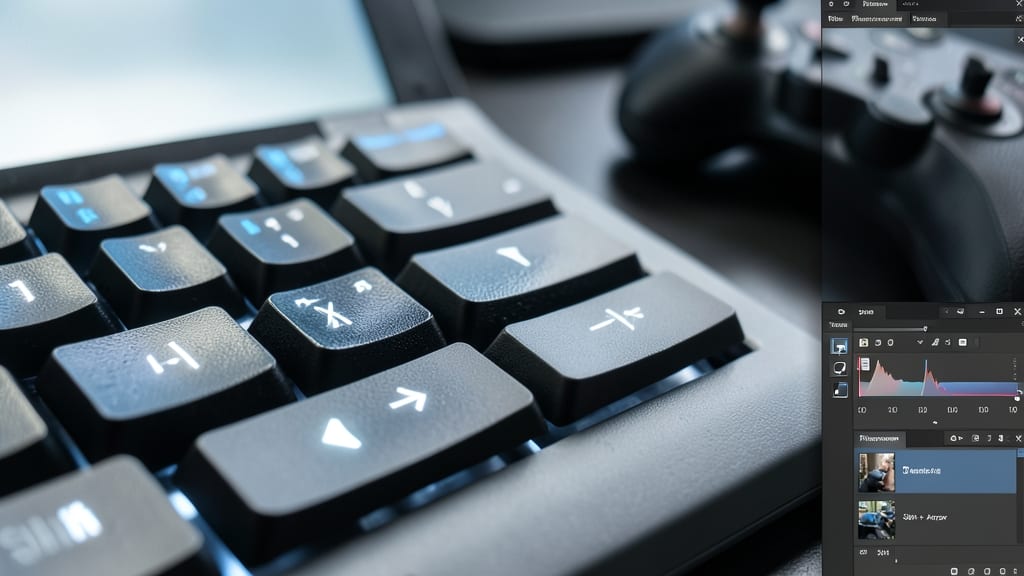
Forget cursor clicks—arrow keys (→ ← ↑ ↓) are the secret weapon for designers, gamers, and power users. They’re not just for moving cursors; they let you navigate Photoshop layers, adjust sliders in video editors, and execute precise in-game actions without fumbling for a mouse.
Press Shift + Arrow to select multiple lines of text in seconds, or use Ctrl + Arrow to jump between words in documents. Gamers rely on them for character movement in RPGs or weapon targeting in shooters, while designers use Alt + Arrow to nudge objects pixel-perfect in Illustrator. The best part? These keys work across Windows, Mac, and Linux with zero setup.
If you spend hours in creative apps or games, mastering arrow key combos will shave minutes off your workflow daily. Try them in Photoshop’s timeline or your favorite FPS—you’ll wonder how you lived without them. ⚡
Accent Grave (`) for Programming Shortcuts
If you’ve ever struggled to type special characters in code or documents, the accent grave (`) is your secret weapon. This tiny backtick isn’t just for quotes—it’s a powerhouse in Bash scripting, Markdown, and LaTeX, where it unlocks commands, code blocks, and special symbols with minimal effort.
In Bash, prefix a command with `` ` `` to execute it inline (e.g., `` date ``). In Markdown, it creates inline code or code blocks (triple backticks), while LaTeX uses it for escaping special characters like ~ or @. Typing `` ls `` in a terminal or wrapping text in `` code `` in Markdown saves hours of formatting hassle.
Developers and academic writers will love this shortcut—it’s the zero-config way to handle special characters without switching layouts. Master it, and you’ll type like a pro in no time. ✨
Asterisk (*) for Multiplication and Bullets
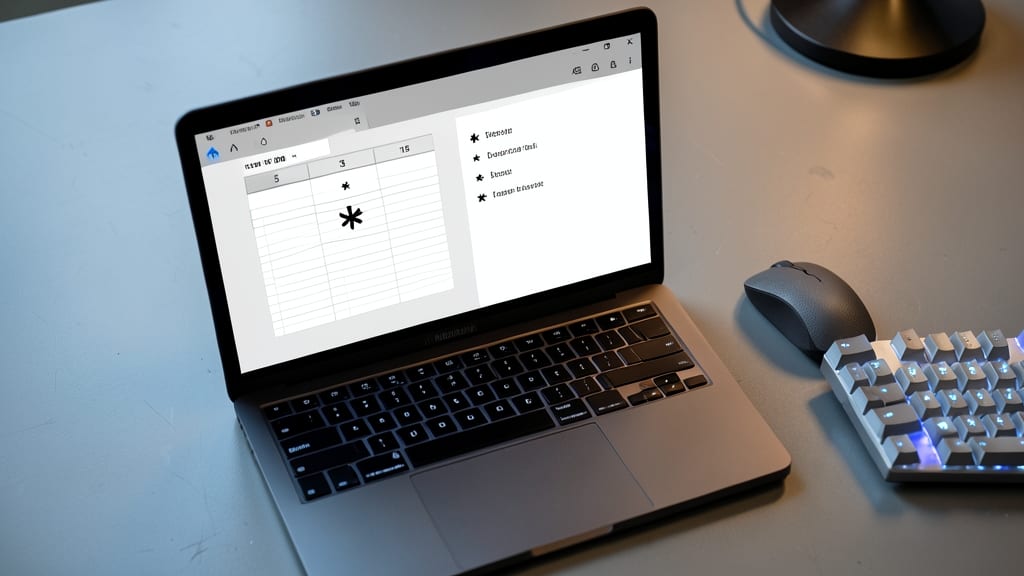
Tired of typing "x" for multiplication or manually formatting bulleted lists? The **asterisk (*) does both—saving you time in spreadsheets, equations, and documents alike.
In math and programming, it represents multiplication** (e.g., 5 3 = 15), while in word processors like Microsoft Word or Google Docs, pressing followed by space creates bullet points instantly. It’s also used in regex patterns and file naming wildcards (*.txt).
Students crunching numbers, accountants preparing reports, and project managers drafting lists will find this dual-purpose symbol a game-changer for efficiency. ✨
Alt Code Shortcuts (Alt + Numbers)
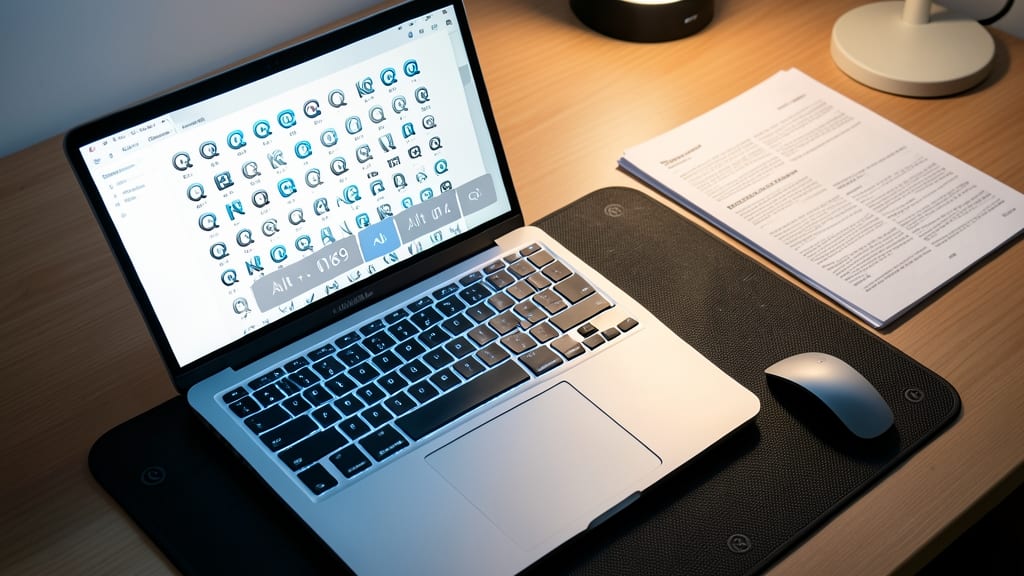
Forget memorizing Unicode values—Windows Alt code shortcuts let you insert special symbols like © (registered) or ® (copyright) with just Alt + numbers. This hidden feature works on any Windows PC and saves hours of hunting through character maps, especially for legal docs or creative projects.
Hold Alt, type the Alt code (e.g., 0169 for © or 0174 for ®), then release Alt to insert the symbol instantly. No plugins or special keyboards needed—just pure keyboard magic. The full list includes currency symbols (€, £), math operators (∑, ∞), and arrows (→, ←).
Perfect for lawyers drafting contracts, designers adding trademarks, or writers formatting manuscripts. Master this, and you’ll never struggle with special characters again. ✨
Section Symbol (§) for Legal Documents
Drafting legal documents or academic papers just got easier with the section symbol (§)—a sleek shortcut that replaces verbose section labels like "Section 1" or "§1" in contracts, patents, and research papers.
This symbol is Unicode U+00A7, meaning you can type it via Alt + 0167 on Windows or Option + 6 on Mac. Legal professionals and students love it for its clean, professional appearance—no more cluttered formatting when referencing clauses or subsections. It’s also widely recognized in ISO standards and government publications, ensuring clarity across industries.
Perfect for lawyers, paralegals, and graduate students who juggle dense documents daily. Master this one, and you’ll save minutes per page—time better spent reviewing content instead of formatting. ✨
Arrow Symbols (→ ←) for Flowcharts

Tired of drawing arrows manually in your flowcharts? The → (right arrow) and ← (left arrow) symbols are your secret weapon for clarity and speed in tools like Microsoft Visio or PowerPoint. These symbols instantly communicate direction—whether mapping processes, algorithms, or data flows—without the hassle of sketching lines.
In Unicode, you can type them directly via Alt + 24 (→) and Alt + 25 (←) on Windows, or use Option + Shift + . , (→) and Option + Shift + , . (←) on Mac. They’re also built into SmartArt and Shapes menus in Office apps, ensuring professional-looking diagrams with zero config. For engineers, they’re perfect for UML diagrams or system architecture visuals—clean, scalable, and universally understood.
If you’re a UI/UX designer, project manager, or engineer, these symbols cut down diagram time by 30%—no more fumbling with arrow tools. Just copy-paste and connect the dots. ✨
Accent Acute (á, é, í, ó, ú)
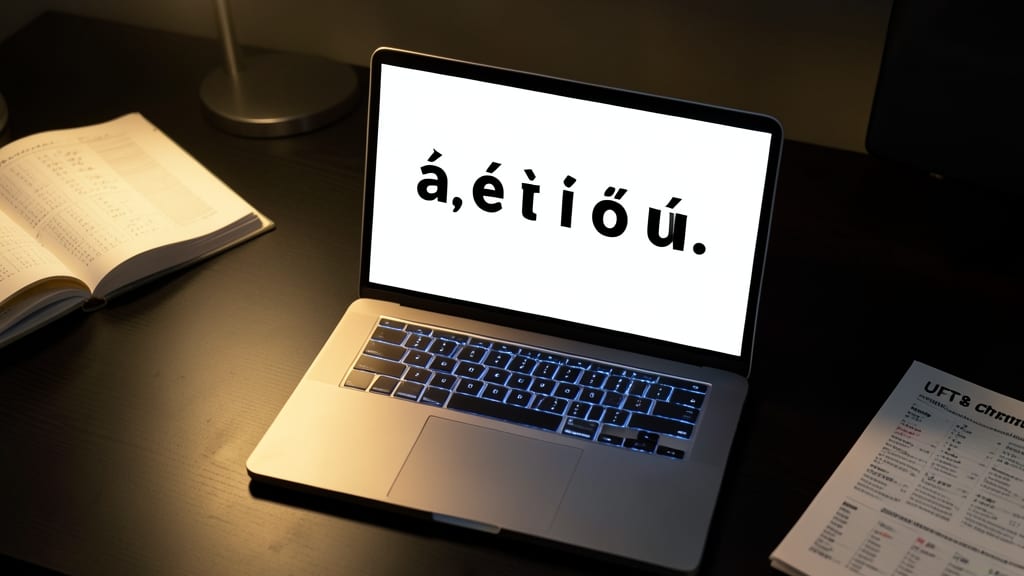
For Spanish, French, and Portuguese speakers, the accent acute (á, é, í, ó, ú) isn’t just a detail—it’s essential for correct spelling and tone. Whether you’re drafting emails in Spanish, writing poetry in French, or coding with UTF-8 characters, these accents ensure accuracy without switching keyboards.
On most keyboards, press Shift + 6 (for ^) followed by the vowel to add an acute accent. For example, Shift + 6 + E creates É. Many modern keyboards also feature dedicated dead keys (like ´ on Spanish layouts) for instant accented characters. This method works across Windows, Mac, and Linux, making it a universal shortcut for multilingual users.
This is a game-changer for language learners, translators, and bilingual professionals who need to switch between languages seamlessly. No more fumbling with language-specific layouts—just type naturally. ✨